Sep 24, 2026
Children's Memory Foam Pillows: The Document Set B2B Buyers Should Require
The documents and design checks B2B buyers should require for children's memory foam pillows: age grading, CPSC lab testing and tracking labels, Class I textiles, safe-use wording.
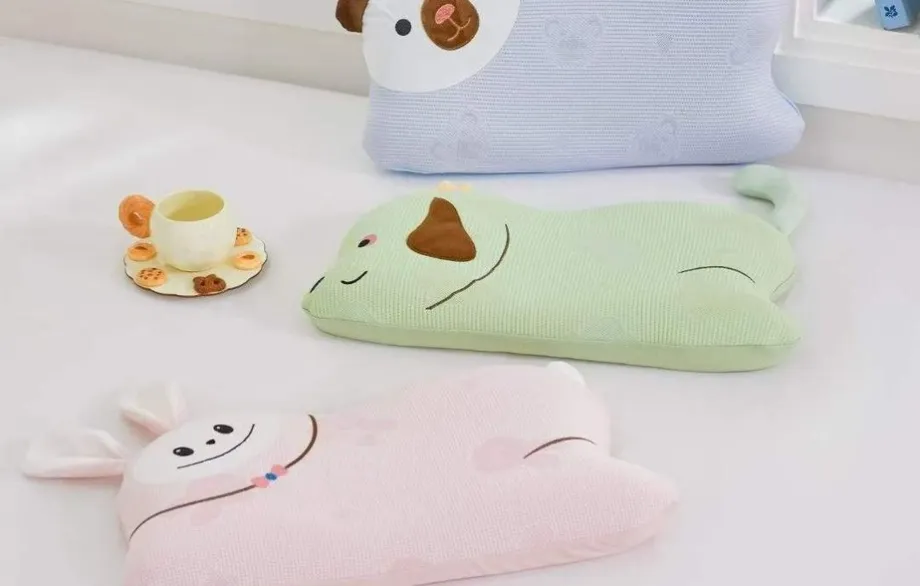
A children's memory foam pillow is one of the simplest products in the category and one of the most demanding to import: the same foam and fabric that ship quietly as an adult SKU attract a thicker file of paperwork the moment the marketing says "kids". That file decides market access, platform listing survival, and who answers when a regulator asks questions. This guide sets out the document set to require, the design details to check on the sample, and the wording discipline that keeps a children's line safe to sell.
Why Kids' SKUs Are a Different Compliance Object
The legal treatment of a pillow changes with who it is sold for, not with what it is made of.
- **Age grading is the switch** — a pillow marketed for children is treated as a children's product in several markets; the same pillow without that positioning is not.
- **Marketing defines the category** — listing copy, packaging, and imagery determine the classification, which means the wording decisions arrive before the compliance ones.
- **The importer owns the file** — retailers and platforms ask the buyer for documents, not the factory; the factory supplies, the importer answers.
Decide early that the children's SKU is a documented product, and the rest is sequencing.
Decide the Age Grading First
Everything downstream hangs on one written line: who is this pillow for.
- **Write the target age into the specification** — for example "children aged 3 and above" — and keep it consistent across the listing, packaging, and label copy.
- **The grading drives the tests and the warnings** — a toddler product and a school-age product are not the same compliance object.
- **Do not inherit the factory's default** — factories grade by size; regulators grade by marketing intent, and the two can disagree.
- **Re-grade deliberately if the market changes** — a SKU moved from kids to general use (or back) is a new compliance conversation, not a photo swap.
Never Market a Pillow for Infant Sleep
This is the one bright line in the category, and it is worth stating plainly.
- **Pillows are not for unsupervised infant sleep** — that is a safe-use reality, not a stylistic choice, and packaging for any juvenile-adjacent pillow should say so.
- **Infant sleep products face dedicated rules** — marketing a pillow as an infant sleep surface can pull it into a regulatory category with its own testing regime; keep the positioning unambiguous.
- **Watch the imagery** — a nursery-scene photo that implies infant use contradicts the age label and creates the exact file a regulator would ask for.
- **Write the safe-use statement once, print it everywhere** — the same sentence on the box, the insert, and the listing.
The US Document Set
If the product is positioned for children in the United States, the paperwork has a known shape.
- **Children's Product Certificate (CPC)** — a certificate, based on testing, that the importer or domestic manufacturer issues for a children's product.
- **Testing by a CPSC-accepted laboratory** — the certificate is only as good as the lab behind it; ask for the test report, not just the certificate page.
- **Tracking labels** — children's products carry permanent marking identifying the manufacturer, location, and batch; this is a physical check on the sample, not a document.
- **Ask the lab which specific rules apply** — which requirements bite for a juvenile pillow depends on materials and design; let the accredited lab scope it rather than guessing.
The EU and UK Approach
Europe works differently, and the difference surprises buyers who assume one global file.
- **No blanket "toy standard" for bedding** — a pillow is not a toy; do not write play-value claims that invite toy regulation onto a bedding SKU.
- **General product safety plus chemical rules** — the EU regime starts from general safety obligations and chemical requirements such as REACH for the materials.
- **UK keeps its own marking** — post-Brexit, UK-bound programs carry their own marking requirements; confirm the current expectation with your lab or broker.
- **Document what you relied on** — keep the material declarations and test reports that support the safety case, even where no single certificate is mandatory.
The Textile Certificate: Class I for Baby and Kids
The cover textile sits in every children's program, and its certificate has a strictness scale.
- **OEKO-TEX classes run from I to IV** — Class I is the strictest tier, defined for baby articles.
- **A kids' program should sit in Class I** — the strictest tier exists precisely for articles in contact with young children; a general certificate is not an equivalent.
- **The certificate must name the actual fabric article** — a mill's general-range document is not a certificate for your cover.
- **Keep the fibre composition in writing** — it supports the care label, the listing copy, and the certificate cross-check at once.
Design Details to Check on the Sample
Documents do not cover everything; some risks are physical and live on the sample.
- **No long cords, strings, or drawstrings** — on a children's pillow these are a strangulation hazard; adjustable toggles belong on adult travel SKUs, not kids' products.
- **Decorative parts must be secure** — ears, eyes, and appliqués like the cartoon shapes common in this category should survive a firm pull test without detaching.
- **Zipper pulls sized and tucked** — a juvenile cover should use small, recessed or fabric-covered pulls.
- **Printed age guidance and warnings on the product or packaging** — permanent, legible, and consistent with the listing.
Wording and Packaging Discipline
Children's categories punish improvised copy faster than adult ones.
- **Age label everywhere** — the same age range on box, label, and listing, or the file is inconsistent by definition.
- **Safe-use statement on all packaging** — the infant-sleep line from above, in every language you sell in.
- **Claims anchored to documents** — comfort and material claims tied to the certificates you hold; health claims (prevents flat head, aids development) have no place on a juvenile pillow.
Common Mistakes With Children's Pillow Programs
The same five errors recur:
- **No written age grading** — the single most common gap, and the root of most others.
- **Borrowing the adult SKU's certificates** — a Class IV general certificate does not substitute for Class I on a juvenile cover.
- **Toy-style marketing** — "fun to play with" copy drags bedding toward toy rules nobody tested it against.
- **Decorative parts approved by eye** — cute ears and buttons need a pull test, not an opinion.
- **Missing tracking labels on bulk** — discovered at retail onboarding, when the goods are already on the water.
Conclusion & Next Step
A children's pillow program is a paperwork program with a pillow attached: fix the age grading in writing, keep the product out of infant-sleep positioning, require the US certificate and tracking labels where that market applies, put the cover textile in the strictest certificate class, and prove the physical details on a pull-tested sample before the wording goes to print.
Talk to our sourcing team on WhatsApp **+86 135 8471 3740** for children's pillow constructions, Class I cover options, and the document set for your target market.