Sep 21, 2026
How to Choose a Memory Foam Pillow Manufacturer: A B2B Buyer's Supplier Audit
A practical B2B supplier audit for memory foam pillow buyers: certification, vacuum compression, Form E tariffs, QC, and MOQ checks that protect your margin.
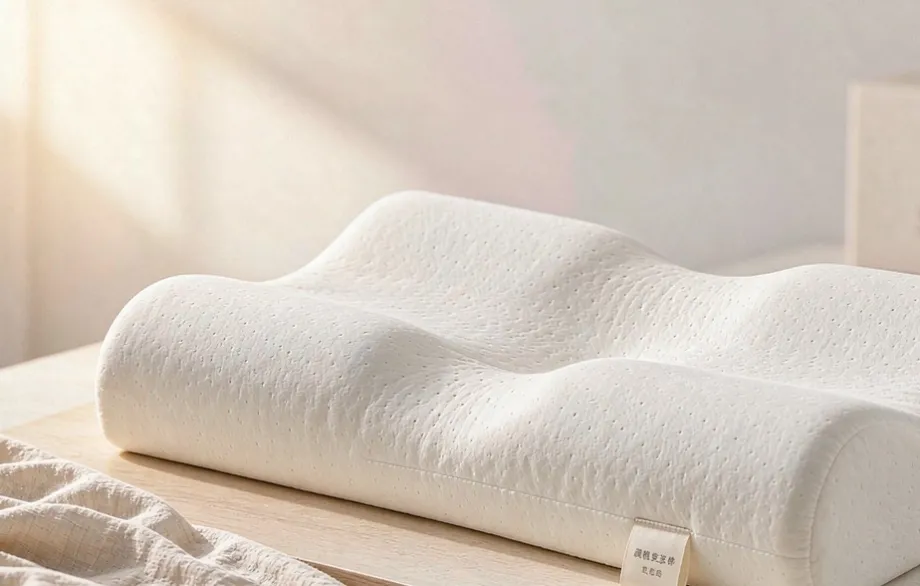
For procurement and sourcing teams importing memory foam pillows, the manufacturer you choose decides far more than the unit price. It determines certification compliance, freight cost, tariff exposure, and the return risk that quietly erodes margin after the container lands. This supplier audit gives buyers a practical, repeatable checklist to separate a reliable memory foam pillow manufacturer from a low-quote risk before any bulk commitment.
Verify the Foam and Textile Certifications First
Compliance is the first filter, not the last. For memory foam pillows, two certifications do most of the work for EU and US importers:
- **CertiPUR-US** covers the polyurethane foam: low VOC emissions, no ozone depleters, no PBDE/TDCPP/TCEP flame retardants, and no heavy metals. It is the document buyers cite to clear retailer and indoor-air compliance.
- **OEKO-TEX STANDARD 100** covers the textile cover — every thread, zip, and button is tested for harmful substances. Class I is the strictest tier, suitable for baby and infant articles.
Pair both for a full-product claim: CertiPUR-US for the foam, OEKO-TEX for the fabric. For factory-process and social compliance, also request **ISO 9001** (quality management) and **BSCI** (labor-standards audit); ask for **GRS** only if recycled content is actually claimed.
Request the certificate PDFs with the factory's legal name and valid dates. A mismatch between the certificate holder and the shipment factory is a red flag, not a formality.
Audit the Production Capability and Foam Profile
Price per piece hides the most important variable: foam density. Density (kg/m³) drives durability, while ILD (Indentation Load Deflection) sets firmness. A pillow built on low-density foam loses support within months and comes back as returns.
- Ask for the exact density and ILD of the foam grade you will buy, not a generic "high quality" claim.
- Require sample approval on the **exact foam profile and cover fabric** before bulk production, and ask the supplier to confirm in writing that the sample grade is the production grade.
- For ergonomic cervical contours, validate the shape against your target sleeper segment — side, back, or combination — rather than trusting a catalog photo.
Quantify Freight Savings from Vacuum Compression
Ocean freight is priced on volume (CBM), not just weight. Vacuum compression plus roll-packing collapses a pillow to roughly a quarter of its loose volume, which lifts a 40HQ container from about 8,000 loose units toward 30,000+ compressed units. Compressed packing is one of the few specification choices that changes landed cost structurally, so put it into the first quotation rather than treating it as a later optimisation.
Build freight into the quote itself:
- Request both loose and compressed CBM from the supplier so you compare **landed cost**, not just ex-works price.
- Confirm the compression recovery window — compressed foam needs time to re-loft after opening, and your buyers should know the lead time impact.
Close the Tariff Gap with Form E (ACFTA)
For shipments bound to ASEAN markets, a **Form E** certificate of origin under the ACFTA (ASEAN-China Free Trade Area) can qualify Chinese-made pillows for **0% import duty** versus the standard MFN rate. The typical rule of origin requires about **40% regional value content**.
Ask the supplier for Form E support and the underlying origin documentation up front. In Vietnam, Thailand, Malaysia, Indonesia, and the Philippines, a clean Form E can erase the duty wedge that local suppliers use to win bids — a decisive edge in a price-sensitive RFP.
Set Lot-Release Quality Controls (AQL)
Certifications open the door; inspection keeps the container from becoming a return wave. Define a clear lot-release checkpoint before loading:
- Agree an **AQL sampling plan** (for example AQL 2.5 for major defects) and apply it to every lot.
- Require a **pre-shipment inspection report** and a written complaint-handling SOP.
- Treat unclear or absent QC as a disqualifier. Vague quality promises are the fastest route to disputed shipments.
Negotiate MOQ, Lead Time, and Payment Terms
Commercial terms should match your go-to-market, not the factory's convenience:
- Confirm **MOQ tiers**, production lead time, and reorder cadence. A low MOQ lets you test a new SKU cheaply; volume tiers unlock better unit pricing.
- Align **payment terms with inspection milestones** — a deposit plus a balance against passed QC protects your cash flow if a lot fails.
- Clarify packaging: branded or plain, and whether vacuum compression is included in the quoted MOQ.
Red Flags During the Audit
The audit works in both directions: most disqualifying signals appear in the first two exchanges if you know what to look for.
- **Certificate holder does not match the quoting factory** — ask for the relationship in writing, or treat it as a pass.
- **Density and ILD answers arrive as adjectives** ("premium", "high-quality") instead of numbers — a specification conversation that cannot happen now will not improve after the deposit.
- **No written QC process** — reluctance to name an AQL level and an inspection stage is itself the finding.
- **Quotations that exclude compression details** — without loose and compressed CBM, landed-cost comparison against other bids is guesswork.
- **Payment terms with no inspection milestone** — a supplier unwilling to tie the balance to a passed inspection is pricing that risk into the deal.
Validate the Supplier, Then Scale
Do not scale on free samples alone. Run a **paid pilot order** to test real behavior: communication speed, production consistency, and packaging integrity under transit. A paid pilot surfaces problems a curated sample never will.
Once the pilot passes the audit and QC gates, scale gradually and keep a **second qualified supplier** qualified in reserve. Single-source dependence is its own risk, independent of price.
Conclusion & Next Step
Choosing a memory foam pillow manufacturer is a margin decision, not a line-item price. Certify the foam and the textile, compress for freight, use Form E for tariffs, and lock QC before you scale. Buyers who run this audit consistently import fewer surprises and protect their landed cost.
Talk to our sourcing team on WhatsApp **+86 135 8471 3740** for certification documents, a vacuum-compression freight quote, and MOQ tailored to your market.