Oct 26, 2026
Memory Foam Pillow Customization Options: A B2B Buyer's Guide to Shape, Firmness, Fabric, and Packaging
Customize memory foam pillows for B2B: shape, ILD firmness, density, cover fabric, branding, and vacuum-compression packaging — with spec and MOQ checklists.
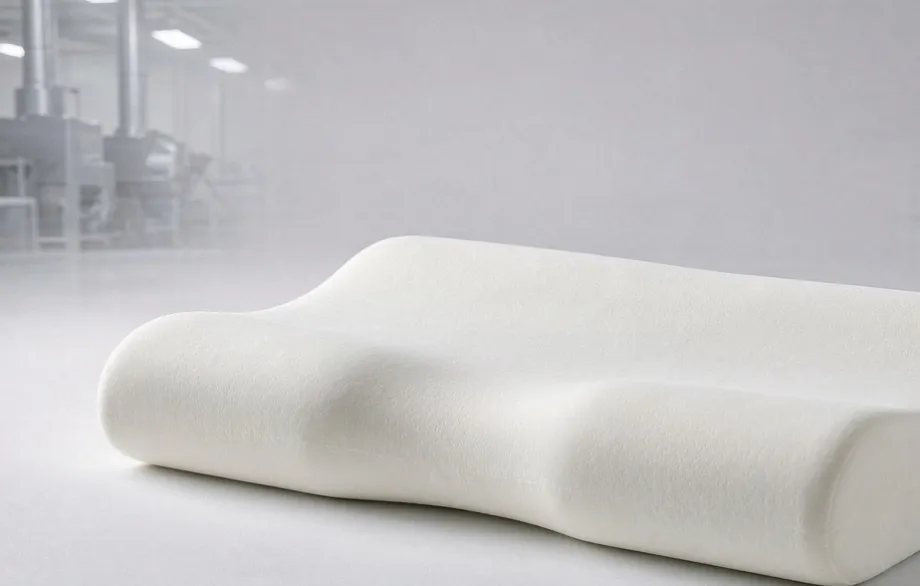
For an importer, a "custom memory foam pillow" is not one product — it is a stack of separate engineering decisions. Shape, foam feel, cover cloth, labeling, and pack-out each change unit cost, sampling window, and whether the second container matches the first. This guide covers the options that move the needle, the numbers suppliers quote, and the spec sheet to send before asking for a price.
The Five Levers That Define a Custom Pillow
Every custom pillow order resolves into five variables: (1) shape and profile, (2) foam firmness as ILD plus density, (3) cover fabric, (4) branding and labels, and (5) packaging. Treat them as a checklist, not a menu — most mills quote only after all five are defined.
Shape — Match the Profile to the Sleep Need
The profile drives tooling. Common memory-foam families:
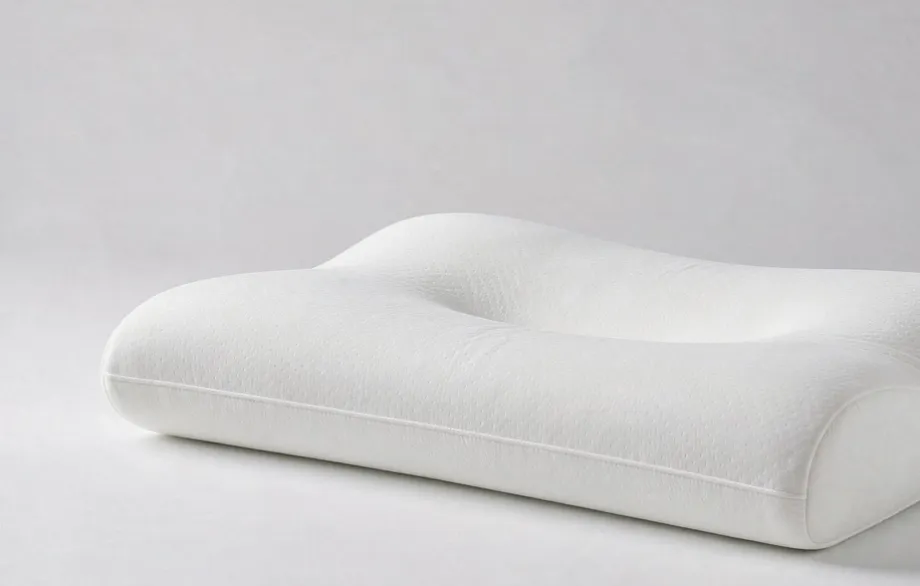
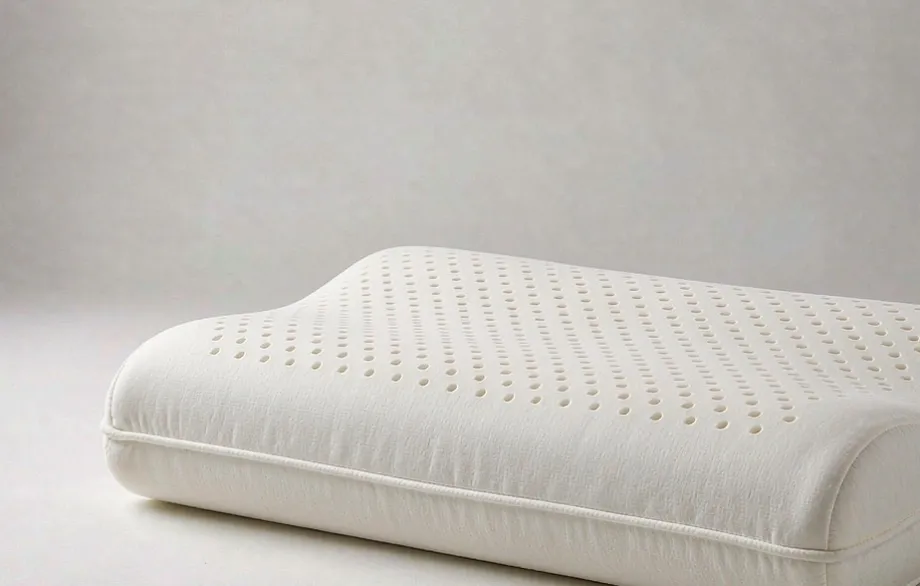
- **Contour / cervical** — a raised edge with a central depression that cradles the head; the dominant ergonomic shape for neck-support lines.
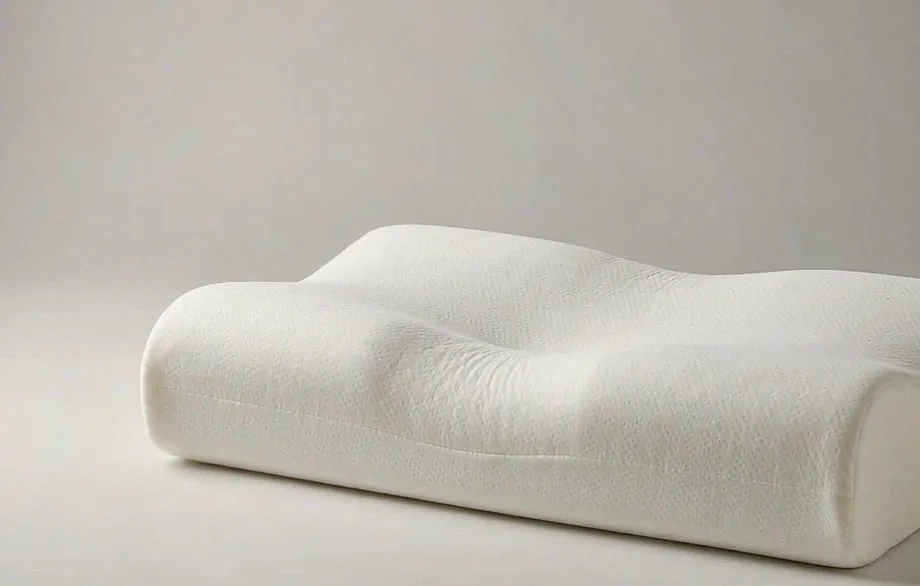
- **Wave** — a gentle two-height design (higher at the top, lower at the bottom) for back and side sleepers.
- **Flat / traditional** — a uniform block, easiest to tool and cheapest to scale.
- **Shredded-foam** — loose clusters in a zippered shell, adjustable by adding or removing fill.
- **Neck roll / bolster**, **body pillow**, and **wedge** — niche profiles that usually need a dedicated mold.
A photo is rarely enough. Suppliers expect finished dimensions, height, a drawing or reference sample, and target feel before cutting a prototype.
Firmness, ILD, and Density — Speak the Supplier's Language
"Firm" is not a spec. The industry quantifies feel with **ILD (Indentation Load Deflection)** under ASTM D3574: pounds of force to compress a 4-inch sample by 25% of its thickness. Higher ILD = firmer foam. For pillows, typical bands run roughly:
- **Extra-soft / soft:** ILD ~10–17 — stomach sleepers, children, light back sleepers.
- **Medium:** ILD ~18–24 — the average adult back or side sleeper.
- **Firm:** ILD ~25–35 — side sleepers, heavier users, and cervical-support designs.
**Density** is the foam's weight per unit volume, usually 3–5 lb/ft³ (≈48–80 kg/m³) for memory foam. It predicts durability, not feel — two foams can share an ILD yet age differently. Always specify ILD *and* density together; one without the other is the usual cause of a sample that "feels wrong."
A Practical ILD and Loft Starting Point
Loft (height with no load) matters as much as firmness; together they decide spinal alignment. A usable starting matrix:
| Sleeper | Loft | Target ILD | Why |
|---|---|---|---|
| Back | 10–12 cm | 14–22 | Supports the cervical curve without pushing the chin forward |
| Side (broad shoulders) | 13–15 cm | 22–32 | Bridges the shoulder-to-ear gap under lateral load |
| Stomach | 6–8 cm | 10–16 | Keeps the neck from over-extending |
| Adjustable / combo | variable | 18–26 | Works across positions when fill is tunable |
Ranges vary by mill, so confirm the exact ILD band on the spec sheet rather than trusting a label.
Cover Fabric — From Basic Polyester to PCM
The cover is what the customer touches and where cooling claims live or die. Common B2B options:
- **Polyester knit** — the cost baseline; durable and printable.
- **Bamboo viscose / rayon** — soft, breathable, moisture-wicking; an accessible price tier.
- **Tencel™ (lyocell)** — wood-pulp fiber in a closed-loop process; smoother hand-feel and stronger moisture management than cotton.
- **Cotton (percale / sateen)** — natural, familiar, breathable.
- **Cooling gel-infused fabric** — engineered cool-touch surface.
- **PCM (phase-change material, e.g. Outlast®)** — microcapsules that absorb and release heat; realistic benefit is roughly 45–90 minutes of active regulation at sleep onset.
- **Mesh / air-layer** — maximum airflow for hot-sleeping markets.
Cool-touch performance is quantified by **Q-Max** (higher = cooler feel); ask for Q-Max and wash-durability data, since cheap cooling fabric can lose effect after laundering.
Branding and Labels — Embroidery, Woven Tags, Hangtags
Private-label work layers branding on the product, in increasing cost:
- **Woven / care label** sewn into the seam — the baseline legal and brand mark.
- **Embroidery** of the logo on the cover — durable but needs a stitch file and a setup fee.
- **Heat-transfer or screen print** for simpler marks.
- **Hangtag / insert card / booklet** for care and marketing copy.
- **Custom color box, barcode label, and carton mark** for retail-ready pack-out.
Confirm logo file format, Pantone matching, and label placement before sampling, or the first bulk run ships with wrong artwork.
Packaging — Vacuum Compression Changes the Math
Packaging is a freight decision, not just a presentation one. Vacuum-compression roll-packing collapses a pillow to roughly one-quarter to one-fifth of its loose volume. Concretely, a 40HQ that holds about 8,000–10,000 loose pillows can carry roughly 30,000–45,000 compressed units — the single biggest lever on per-unit ocean cost. Other pack styles suppliers offer: PE bag, non-woven bag, zippered bag, color box, and export carton with shipping marks. Note that compressed foam needs a recovery window after opening; tell your warehouse the re-loft time so goods are not rejected as "flat."
Sizes — US vs EU vs Travel
Dimensions differ by market, and mismatched sizing is a frequent rejection:
- **US:** Standard 20×26 in, Queen 20×30 in, King 20×36 in.
- **EU:** 50×70 cm, 50×75 cm, 65×65 cm, 80×80 cm.
- **Travel / neck:** 12×16 in or U-shape bolster.
Quote per market and confirm tolerance (±1–2 cm) before bulk cutting.
Sampling Window and MOQ for Custom Work
Sampling sets the clock for the whole project. With materials and structure on hand, a regular sample typically takes **5–10 days**; a custom foam shape, special cover fabric, or private-label package runs **10–15 days**. Most China memory-foam OEM mills quote MOQ at **300–1,000 units per style**, with private-label plus custom packaging often starting around **500**. A new contour profile may carry a one-time tooling or mold fee on top of the unit price. Build the calendar backward from launch, not forward from the sample.
The Pre-Quotation Spec Sheet (Checklist)
Send this before quoting, and you get a usable number on the first round:
- Pillow type and shape (drawing or reference sample)
- Finished size and height / loft
- Target foam feel: ILD band **and** density
- Cover fabric and color (Pantone if printed)
- Zipper design and label position
- Branding: woven label, embroidery, hangtag, color box
- Packaging method (vacuum roll, PE bag, carton)
- Order quantity and destination market (drives certification and duty route, e.g. Form E for ASEAN)
Clear specs turn a vague ask into a firm sample, a known MOQ, and a repeatable bulk run.
Conclusion & Next Step
Customizing a memory foam pillow is less about picking options and more about documenting them — shape, ILD and density, cover fabric, branding, and pack-out on one spec sheet. Lock those five and the factory holds the second container within tolerance of the first. Talk to our sourcing team on WhatsApp **+86 135 8471 3740** for MOQ, CertiPUR-US / OEKO-TEX docs, and a vacuum-compression freight quote tailored to your market.