Sep 19, 2026
Memory Foam Pillow Density and ILD: How to Specify Foam Grade for B2B Orders
A B2B guide to specifying memory foam pillow density (kg/m3) and ILD firmness: durability, feel, certification interplay, PO wording, and sample validation.
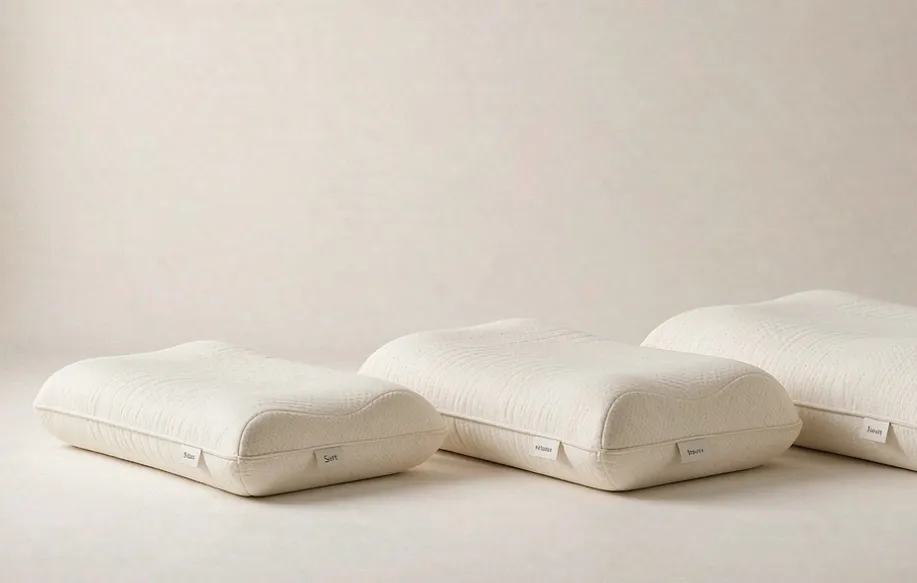
Most memory foam pillow orders are placed against a photo, a price, and a phrase like "high density foam." That is where margin leaks start. Density and ILD are the two numbers that actually determine how a pillow feels on night one, how long it holds support, and whether your cost per unit survives the return window.
Why Density and ILD Are Two Different Specs
Density and firmness are frequently confused, but they measure different things.
- Density is mass per unit volume, expressed in kg/m3. It is a durability and material-cost proxy.
- ILD (Indentation Load Deflection) is the force required to compress the foam by a set percentage. It is the firmness the sleeper feels.
A high-density foam can still be soft, and a firm foam can be low density. Quoting only one of the two leaves the specification open to interpretation, and the factory will normally interpret it in the direction of lower cost.
Typical Density Ranges and What They Mean
- 40-50 kg/m3: entry grade. Lowest cost, but support loss shows up within months of nightly use.
- 50-60 kg/m3: the mainstream commercial band for retail and e-commerce programs.
- 60 kg/m3 and above: premium and hotel grade, with the best long-term shape retention.
Match the band to your channel, not to a marketing claim. A hospitality program replacing pillows every 18 months has a different optimum than a value retail line.
ILD: Setting Firmness for Your Market
ILD is where comfort and market fit live. A single "medium" is not a spec, it is an opinion.
- Specify a numeric ILD range and confirm the test method and compression percentage the factory uses.
- Map firmness to your buyer segment: side sleepers need higher loft with a softer surface layer; back sleepers need firmer cervical support.
- For ergonomic cervical contours, the ILD of the raised neck zone matters more than the average.
How Density and ILD Interact With Certification
Foam grade and compliance are linked, not independent.
- CertiPUR-US certifies low VOC emissions and the absence of banned flame retardants; it does not rate durability.
- OEKO-TEX STANDARD 100 covers the removable cover textile, not the foam core.
- GRS applies only when recycled content is genuinely claimed.
Ask for the certificate and the density/ILD test report together. One without the other tells you half the story.
Specifying Foam Grade in the Purchase Order
Vague wording is the single largest source of disputes. Replace adjectives with numbers.
- Replace "high density foam" with "density 55 kg/m3 plus/minus 3, ILD 16 plus/minus 2 (test method stated)".
- State the tolerance explicitly; without it, any measured value is arguably compliant.
- Name the cover specification too, since cover weight changes perceived firmness.
- Confirm whether vacuum compression is applied and agree the re-loft recovery window.
Validating the Spec: Samples, Golden Sample, and Batch Checks
- Approve a golden sample against the written spec and keep it sealed as the reference for future orders.
- Require a density and ILD test report per production batch, not a generic one from last year.
- Add both to your AQL lot-release checkpoint so a drift in foam grade is caught before the container loads.
Common Buyer Mistakes
- Buying on price per piece alone: the cheapest unit is usually the lowest density.
- Accepting "high density" without a number: unenforceable at inspection.
- Ignoring the test method: ILD values measured differently are not comparable.
- Skipping batch validation: a correct first sample does not guarantee lot three matches.
Conclusion and Next Step
Density sets how long a memory foam pillow lasts; ILD sets how it feels. Put both on the purchase order with tolerances and a stated test method, pair them with CertiPUR-US and OEKO-TEX documentation, and verify every batch at lot release.
Talk to our sourcing team on WhatsApp +86 135 8471 3740 for density and ILD test reports, a golden-sample program, and MOQ tailored to your market.