Sep 19, 2026
Memory Foam vs Latex Pillows: A Sourcing Comparison for B2B Buyers
A B2B sourcing comparison of memory foam and latex pillows: feel, durability, freight weight, certification paths, allergy and odor objections, cost structure, and channel fit.
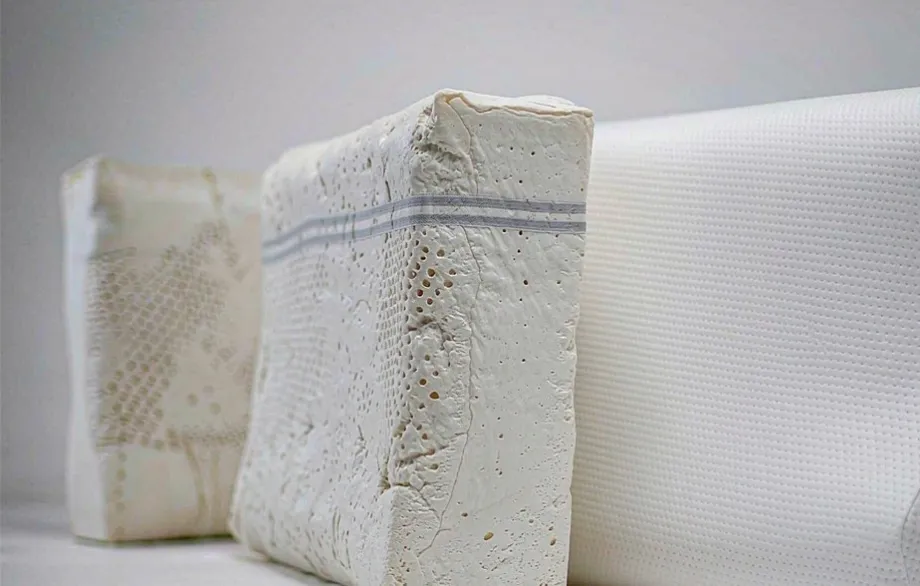
Choosing between a memory foam core and a latex core is not a taste question — it is a sourcing decision that cascades into unit cost, freight weight, certification paperwork, and which retail channel you can credibly serve. Buyers who pick a core by trend rather than by channel fit usually discover the mismatch after the container lands. This comparison breaks down what actually differs between the two materials at the buying level.
Why the Core Material Drives Everything Downstream
The core determines four things you cannot easily renegotiate later: how the pillow feels, how long it lasts, which certificates you can legitimately claim, and what it costs to land.
- **Feel** sets your return rate, because a pillow that feels wrong comes back.
- **Durability** sets replacement cycles, which matters enormously for hospitality programs.
- **Certification** determines which market claims you can make without compliance risk.
- **Density and weight** set freight per unit, which quietly erodes margin.
Treat the core choice as a specification decision, not a marketing one.
Feel and Performance Differences
The two materials behave in nearly opposite ways under load.
- **Memory foam** rebounds slowly, contours to the head and neck, and distributes pressure. It is temperature-sensitive — it softens with body heat, which is exactly why cooling covers, gel infusion, or graphene additives exist.
- **Latex** rebounds quickly and feels buoyant rather than enveloping. Its open-cell structure and pinhole cores move air, so it sleeps cooler without additives.
- For **hospitality**, latex recovers its shape visually between guests, while memory foam contours more closely to the sleeper.
Neither is objectively better. They serve different sleeper expectations, and your buyer segment decides which one is right.
Durability and Service Life
Service life is where the two cores diverge most in total cost of ownership.
- **Memory foam** in the 50–60 kg/m³ band typically delivers a two to three year service life before support loss becomes noticeable.
- **Latex** generally outlasts memory foam in shape retention and resists permanent sagging, though natural latex can stiffen or crumble with age and should be protected from direct UV exposure during storage.
For a program that replaces pillows on a fixed cycle, the longer service life can justify a higher unit cost — but only if your replacement cycle is long enough to capture it.
Weight, Freight, and Packaging Implications
Latex is meaningfully denser than typical memory foam, and freight is billed on volume **and** weight.
- **Latex** units weigh more per piece, which raises both ocean freight and last-mile delivery cost.
- **Memory foam** compresses aggressively and typically recovers a higher share of its volume savings.
- Both can be **vacuum compressed and roll-packed**, but the recovery window differs — agree the re-loft time in writing and build it into your inbound QC, so you are not measuring pillows before they have recovered.
Certification and Compliance Paths
The two materials certify under different schemes, and mixing them up creates real compliance risk.
- **Memory foam** pairs with **CertiPUR-US** for low VOC emissions and the absence of banned flame retardants.
- **Latex** claims usually point to **GOLS** (Global Organic Latex Standard) when organic content is claimed, and the natural-versus-synthetic latex ratio must be documented rather than asserted.
- Both cores still need **OEKO-TEX STANDARD 100** on the removable cover textile.
- Be precise with "natural" and "organic" wording. These are regulated marketing claims in several markets, and an unsupported claim is a liability you own as the importer.
Allergy, Odor, and Common Buyer Objections
Two objections come up repeatedly in buyer conversations, and both are manageable with the right documentation.
- **Latex allergy** is a genuine consideration: natural latex contains proteins that a small share of consumers react to. Disclose the material clearly so the end buyer can decide.
- **Memory foam odor** on arrival is usually residual off-gassing. Request VOC emissions data and give the product an air-out window before it reaches the customer.
- Neither material is automatically "hypoallergenic." That claim needs substantiation regardless of core.
Cost Structure and Margin Implications
The two materials sit at different points on the price ladder, which shapes how you position them.
- **Memory foam** generally carries a lower unit cost and supports wider price laddering across good, better, best tiers.
- **Latex** commands a higher retail price and suits premium or eco-positioned ranges, but the landed cost is higher once freight weight is included.
- Confirm **MOQ and any tooling differences** up front, because latex programs sometimes carry different minimums than memory foam runs.
Matching the Material to Your Channel
A practical rule of thumb for most import programs:
- **Value retail and e-commerce** — memory foam, where price laddering and freight savings matter most.
- **Premium, eco, or hospitality** — latex, where service life and a cooler feel support a higher price point.
- **Mixed programs** — carry both and differentiate clearly by firmness, cover, and certification so the two lines do not cannibalize each other.
Conclusion & Next Step
Memory foam wins on cost, freight, and price laddering; latex wins on service life, responsiveness, and premium positioning. Decide by channel and replacement cycle, document the certification path that matches the core, and confirm freight weight before you commit to a landed-cost target.
Talk to our sourcing team on WhatsApp **+86 135 8471 3740** for memory foam and latex samples, certification documents, and a landed-cost comparison for your market.