Sep 19, 2026
Ergonomic Memory Foam Pillows: A Foam-Profile and Sample-Approval Guide for B2B Buyers
How B2B buyers specify and approve ergonomic memory foam pillow profiles: contour, wave, zoned and comfort-loft shapes, profile tolerances, sample checks and claim wording.
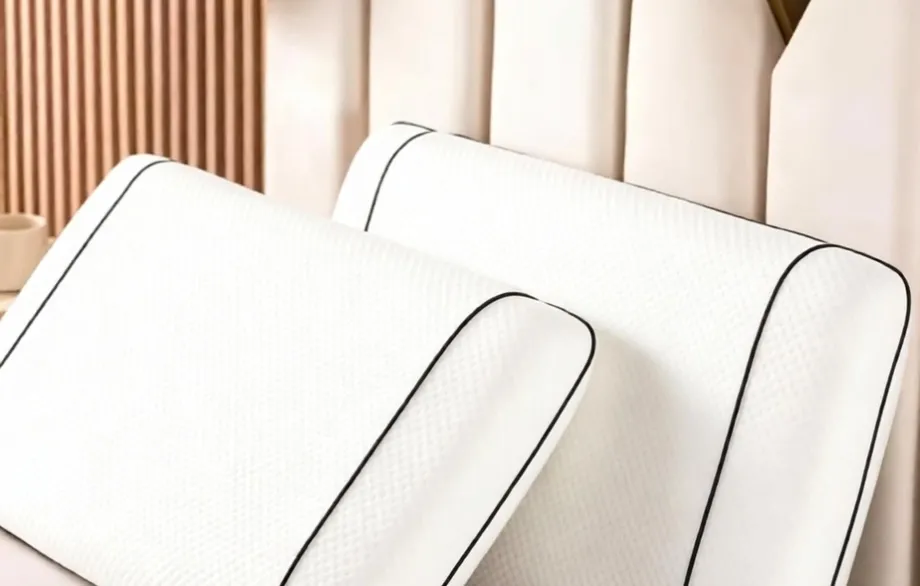
"Ergonomic" is the busiest word in the pillow category, and in quotations it can mean anything from a genuine two-height contoured core to a flat pillow with a soft cover. For a B2B buyer the difference is invisible in a catalogue render and obvious in a purchase order that spells out the profile. This guide covers the profile shapes you will actually be quoted, the spec lines that define them, and the sample checks that confirm the shape before bulk.
What Ergonomic Means at Construction Level
An ergonomic pillow is a shaped foam core, and the shape is manufactured geometry — not cover design, not marketing copy.
- **The core carries the shape** — profile heights, curves, and relief zones are cut or moulded into the foam itself.
- **The cover must transmit the shape** — a stiff or heavily quilted cover can flatten the profile the buyer is paying for.
- **The shape is measurable** — edge loft, centre loft, and core weight are numbers that belong on the spec sheet.
- **The shape is the claim** — whatever the retail box says, the only defensible basis is the geometry you approved on the sample.
The Four Profile Types You Will Actually Be Quoted
Working catalogues settle into four families, and each solves a different shelf problem.
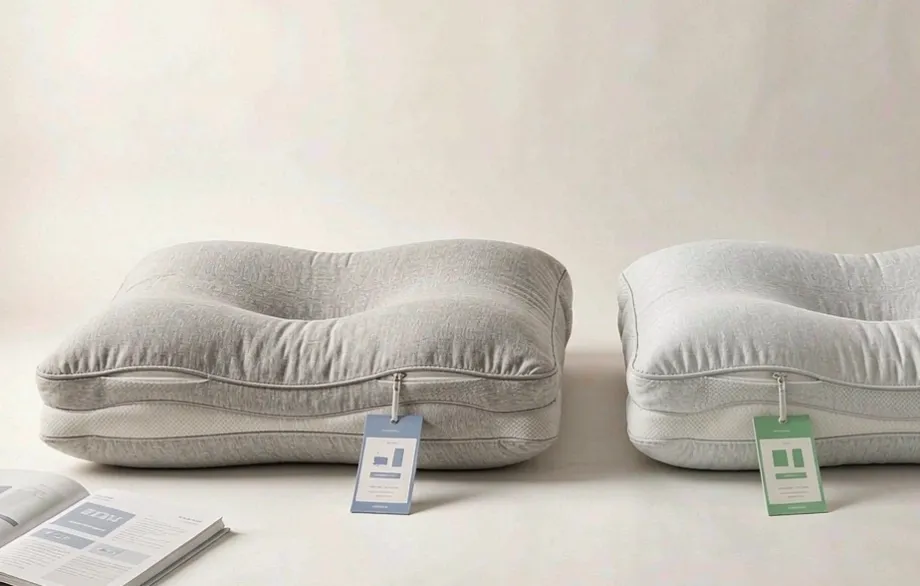
- **Two-height contour** — a higher edge and a lower edge on the same core, so one reversible SKU serves different sleep-position preferences. Documented examples in this category run 70×40 cm with 8 cm and 10 cm loft options.
- **Wave profile** — a continuous curved surface rather than two flat heights; softer in appearance, common in youth and latex-hybrid lines around 40×60 cm.
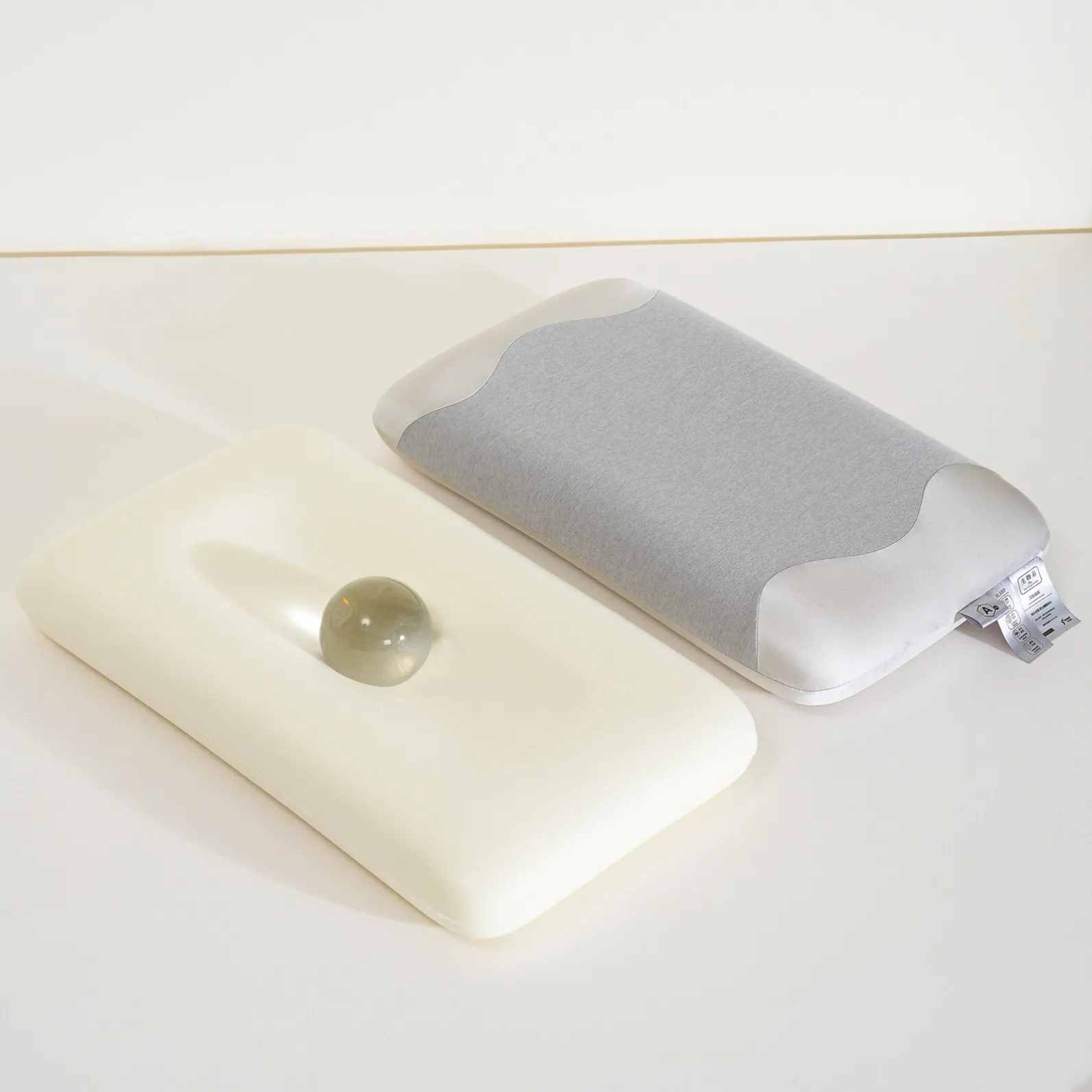
- **Zoned or centre-relief designs** — a formed centre area with raised support rails, sometimes with a ventilation aperture; typically the largest cores, around 65×40 cm at 1.7–1.8 kg.
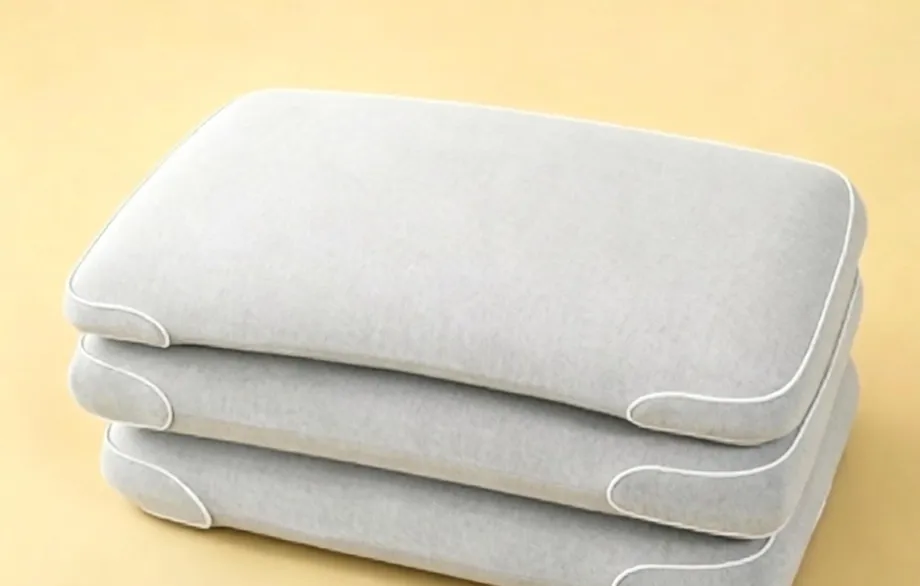
- **Comfort-loft shapes** — bread-style rounded profiles at a single loft (a common example is 68×38×10 cm); not shaped for position support, but they carry the ergonomic look on a mid-range shelf.
Knowing which family a quotation belongs to is the first step; most failures come from comparing a contour against a comfort-loft shape on price alone.
Two-Height Profiles: One SKU, Two Sleeper Preferences
The two-height contour is the workhorse of the ergonomic range, and it deserves a closer look because it is the easiest to get wrong.
- **What it does** — the higher edge suits sleepers who prefer fuller support under the neck; flipped, the lower edge suits those who want less lift. One core covers both preferences without a second mould.
- **What to confirm** — the height difference must exist in the foam, not only in the drawing; ask for edge and centre loft as separate numbers.
- **What it saves** — one mould, one cover pattern, and one variant on the price list instead of two minimum order quantities.
- **Where it fails** — when the cover is too tight or too thick, the shopper feels a flat pillow and the second height becomes a line on the spec sheet only.
If the sample cannot demonstrate both heights by feel, the design is not finished.
Reading the Profile Spec Sheet
A profile quotation should carry five numbers at minimum; if any are missing, ask before comparing prices.
- **Edge loft and centre loft** in centimetres, stated separately — a single "height" figure hides the entire design.
- **Core weight** — the same footprint at 1.2 kg and 1.8 kg is not the same product; weight correlates with density and support feel.
- **Cover specification** — fibre blend and weight, plus whether the cover is patterned for the profile; a flat-pattern cover on a contoured core shifts fabric and blurs the shape.
- **Compression recovery** for vacuum-packed programs, since a shaped core must re-loft into its geometry, not just its volume.
How to Approve a Profile Sample
Profile approval is physical work, and it takes about ten minutes if it is done in order.
- **Measure, do not eyeball** — put a ruler on the edge and centre heights and compare them to the spec; a two-centimetre gap between sample and sheet is a production tolerance problem waiting to happen.
- **Hand-press both heights** — press the high edge and the low edge in turn; the difference should be felt immediately, with the foam recovering slowly and evenly.
- **Check the shape through the cover** — fit the cover and press again; if the profile disappears under the fabric, the cover construction needs to change before bulk.
- **Compress and recover** — for vacuum-packed shipments, confirm the shaped core returns to its geometry within the stated re-loft window, not merely to its size.
Keeping the Marketing Language Defensible
Profile products attract the strongest consumer promises in the category, and the safe wording is comfort wording.
- **Say what the shape is for** — "two-height design for side and back sleepers", "formed centre zone", "medium support" — all describable and demonstrable.
- **Avoid medical claims** — treatment, cure, therapeutic effect, and pain relief language belongs to regulated categories, not to pillow packaging or listings.
- **Match the claim to the approved sample** — every phrase on the retail box should point at something measurable in the golden sample.
- **Check marketplace rules** — major platforms restrict health claims in the bedding category; comfort and design language clears review.
Where the Contour SKU Sits in Your Range
A shaped core earns its tooling back in the middle and upper tiers of a range.
- **Entry tier stays simple** — comfort-loft shapes carry the entry price point; putting the moulded profile at entry compresses margin without a price to show for it.
- **Contour as the better tier** — the two-height design is the visible, explainable upgrade that justifies the step up on the shelf.
- **Zoned designs at the top** — formed centres and larger cores sit naturally at the premium position where packaging and certification do the supporting work.
- **One profile per tier** — avoid quoting three shaped variants in the same tier; the differences blur at retail and split the minimum orders.
This keeps the ergonomic story clear: each tier answers a different shopper with a shape they can feel.
Common Mistakes When Ordering Ergonomic Profiles
The same four errors recur across contour programs:
- **Approving a render instead of a sample** — renders cannot show loft difference, cover stretch, or recovery.
- **Ordering "ergonomic" without profile numbers** — the quotation then gets filled with whatever the factory defaults to.
- **Ignoring the cover's effect on the shape** — a beautiful core under a stiff cover ships as a flat pillow.
- **Skipping the compressed-recovery check** — shaped cores are the first to suffer when a packing program is validated on flat samples only.
Conclusion & Next Step
Ergonomic value lives in measurable geometry: choose the profile family deliberately, quote edge and centre loft separately, approve the shape through the cover, and keep the retail wording anchored to what the golden sample demonstrates.
Talk to our sourcing team on WhatsApp **+86 135 8471 3740** for profile options, two-height contour specifications, and a comparison sample pack for your range review.