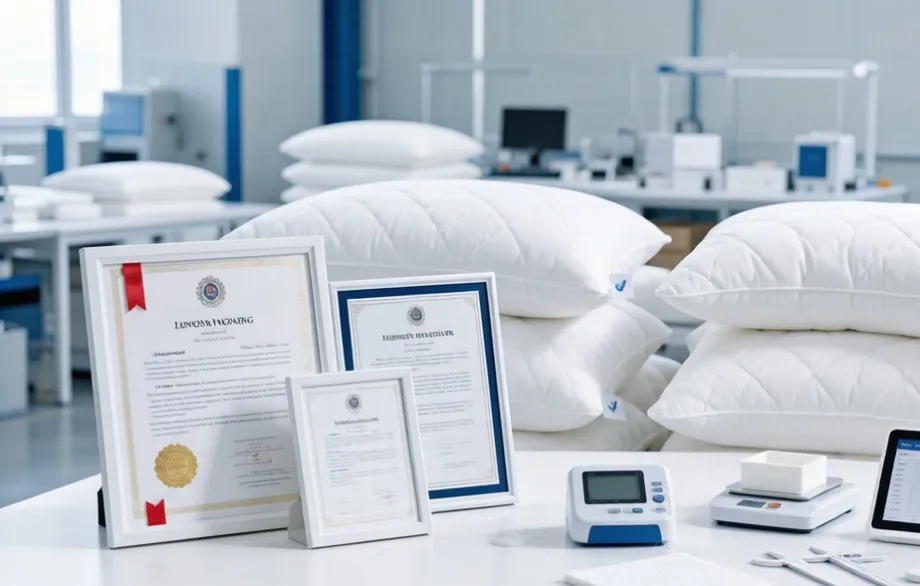
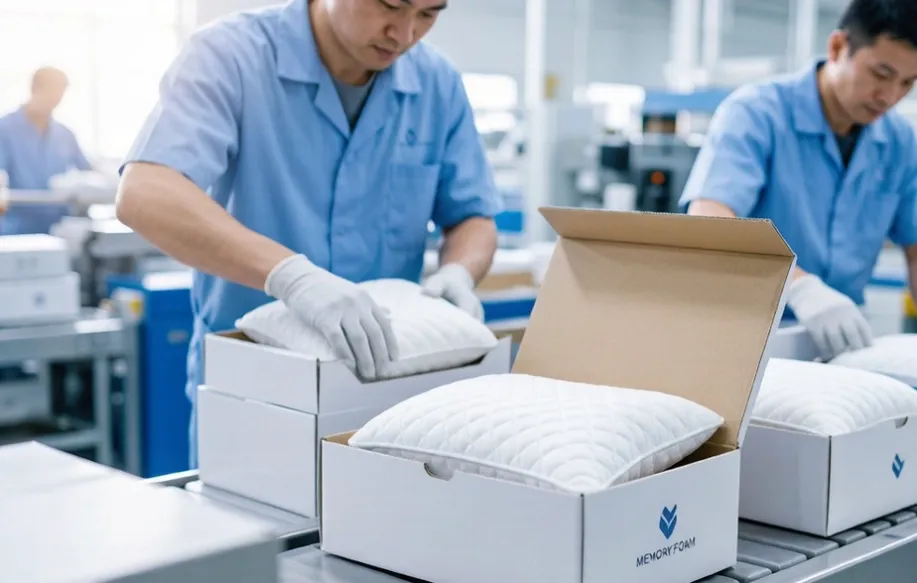
Custom Memory Foam Pillow Branding Checklist: Woven Labels, Embroidery and Low-MOQ Pack-Out Control
Control woven labels, embroidery, care-label copy and carton marks with one approval sheet before a low-MOQ private-label memory foam pillow order enters bulk production.
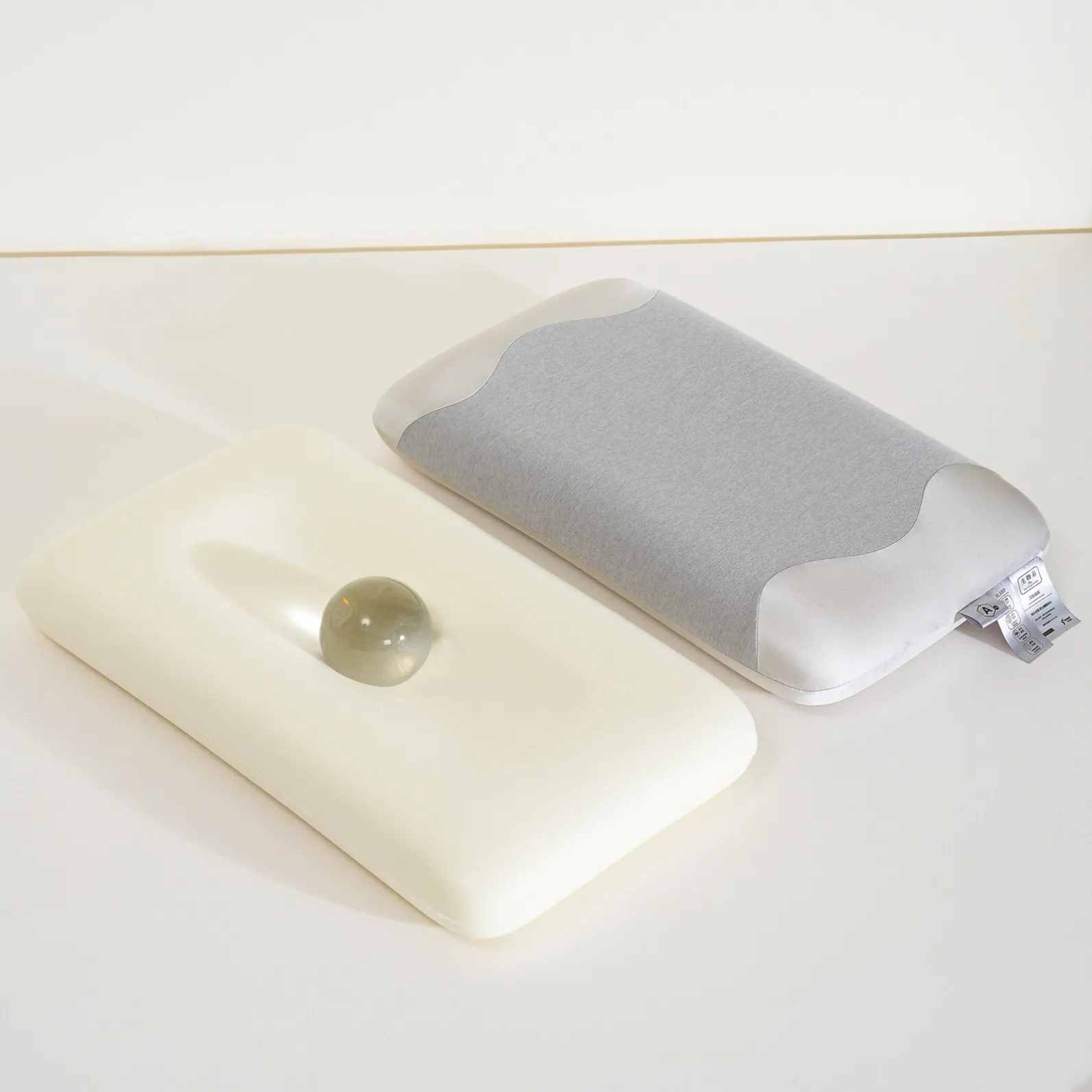
For Amazon FBA sellers, hotel buyers and private-label brands, a logo file is not an approval standard. The commercial risk starts when the approved artwork, thread or label position, care-label language and master-carton marks differ between the sample and the bulk release.
Separate Brand Components Before Quoting
Break the branding pack into components before comparing an OEM quote: woven main label, embroidery or patch, care label, insert, unit bag, colour box and carton mark. Each component has its own setup, material and production constraint, so a single statement such as “low MOQ with logo” is not sufficient for purchase release.
Ask the supplier to quote the component variables separately. Fabric MOQ, label weave, thread count, Pantone matching, barcode format and carton print method can change the unit cost without changing the foam core specification.
| Branding element | Buyer approval checkpoint | MOQ or cost variable to quote | Factory evidence for release |
|---|---|---|---|
| Woven main label | Artwork, finished size, fold type, fibre and care wording | Label material, weave setup and colour count | Signed artwork plus sewn sample photo |
| Embroidery or logo patch | Stitch density, thread colour reference and placement point | Digitising fee, stitch count and patch backing | Approved embroidery sample with placement measurement |
| Care label or insert | Language version, composition, wash symbols and SKU copy | Print run, paper stock and number of language versions | Approved proof plus packed-unit check |
| Master carton marks | SKU, carton count, ship-to data and handling marks | Print method, carton grade and carton version | Carton-mark proof plus final pack-out photo |
Approve Artwork, Placement and Material
A flat mockup proves only the graphic. It does not prove the final location after the pillow cover is sewn, the appearance of the thread on the selected fabric, or whether a woven label curls after washing and packing.
Request a Free Mockup for artwork and carton marks, then approve a physical or photo-documented pre-production sample for placement. The approval sheet should show the logo file revision, Pantone reference where applicable, logo orientation, label dimensions and tolerance from a stable seam or cover edge.
Use One Sample Approval Sheet
Keep the commercial sample and the bulk release tied to one dated Sample Approval Sheet. A supplier, buyer and inspection team should work from the same version rather than from separate email attachments.
- List the approved foam core, cover fabric, label artwork and packaging artwork by revision.
- Attach photos for front, back, side seam, label placement and packed unit.
- State the inspection points: embroidery defects, label skew, print legibility, barcode scan result and carton-mark accuracy.
- Record the agreed defect handling method before the PO enters bulk production.
This is also the cleanest way to protect a flexible program with a small order quantity. Low-volume branding remains workable when the approved components and their cost drivers are frozen before materials are released.
Control Low-MOQ Pack-Out and Carton Marks
For low-MOQ pillow programs, avoid assuming that every branded component can run at the same quantity as the finished pillow. Confirm which parts can be digitally printed, which require a conventional plate or setup, and whether leftover labels or cartons can be retained for a repeat order.
For Amazon FBA or distributor shipments, provide the pack-out instruction before carton production: unit quantity, polybag or insert requirement, barcode position, master carton CBM, carton gross weight and ship-to mark format. The carton mark must be verified against the final PO and forwarder instruction, not an early RFQ.
Release Bulk After Branding QC
Branding control does not replace product QC. It should sit alongside checks for cover workmanship, zipper or seam function, foam core size, vacuum compression condition and the agreed defect rate.
Our production team supports flexible low-volume programs with fast samples, Free Mockup layouts for labels and carton marks, and controlled inspection before the bulk lot is released. Quote-specific MOQ and lead time are confirmed only after the approved component list and pack-out requirement are known.
For cover and fabric approval, see our memory foam pillow cover fabric sourcing guide. For inbound labelling and shipment preparation, see our Amazon FBA pillow prep checklist. Use the RFQ checklist to structure the first OEM enquiry.
[ Explore Technical Specs for Ergonomic Memory Foam Cervical Pillow ]