Aug 19, 2026Buyer Guides
CertiPUR-US vs OEKO-TEX STANDARD 100: A Documentation Checkpoint for Memory Foam Pillow Buyers
A B2B document-control guide for checking certification scope, certificate holder and approved material construction before a memory foam pillow order enters production.
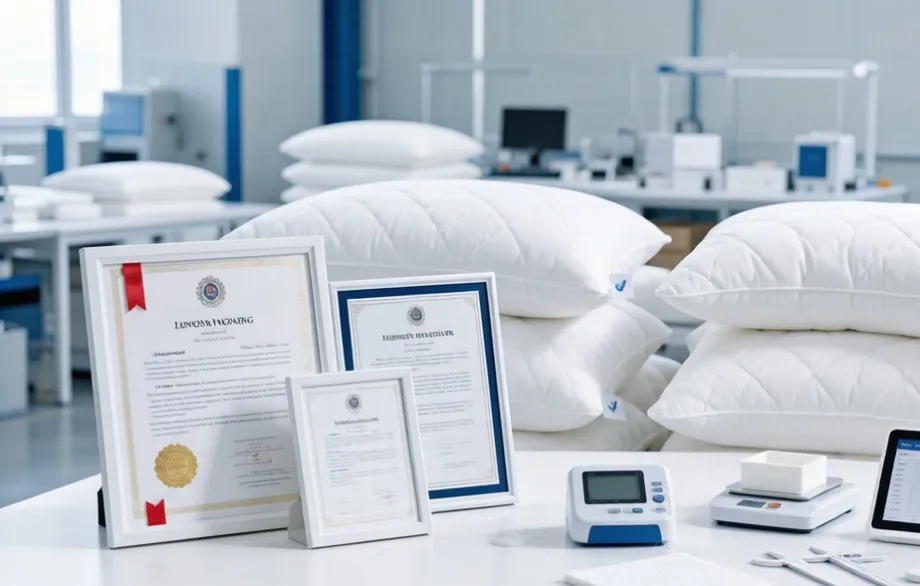
For B2B memory foam pillow buyers, certification risk is usually a document mismatch between the ordered construction, the production site and the available evidence. The practical question is not which logo looks stronger; it is whether the evidence matches the ordered material, factory and market claim.
Start With the Scope of Each Certificate
CertiPUR-US is a certification program for qualifying flexible polyurethane foam. Check it against the foam component and certificate holder; do not treat it as evidence for the cover, zipper, label or finished pillow.
OEKO-TEX STANDARD 100 is a product-testing label with defined scope and certificate details. Confirm which textile component, product class and production stage are covered before using it in listing copy, packaging or customer documents.
Match Evidence to the Approved Product Construction
Build a document register alongside the sample approval sheet. List the foam grade, cover composition, thread, zipper, label and any claimed recycled or cooling component, then state what evidence supports each item.
- Foam reference: supplier name, material description, certificate number and validity period.
- Textile reference: mill or certificate holder, fabric composition, colorway or dye route where applicable, and product-class scope.
- Finished SKU reference: approved sample code, BOM revision, care label, packaging artwork and purchase-order description.
This register prevents a common sourcing error: accepting a genuine certificate that is unrelated to the exact material or factory used for the order.
Verify the Certificate Before Artwork Approval
Request the original document or the issuer's verification route, not a cropped image. Check the legal entity, manufacturing address, covered material, certificate number, issue date and expiry date against the supplier and the approved BOM.
Where a brand plans to print a certification reference on a hangtag, color box or marketplace asset, release the artwork only after the certificate scope and permitted wording are confirmed. A certification document supports a defined claim; it does not automatically authorize every marketing statement.
Use Change Control for Repeat Orders
Certification checks should be repeated whenever the foam source, cover mill, fabric composition, label wording or production site changes. The supplier should flag the proposed change before bulk production, submit revised evidence, and obtain written buyer approval against the same sample approval sheet.
For flexible private-label programs, SomaSleep can prepare a Free Mockup, coordinate rapid sampling and consolidate the buyer's approved documentation list. A low-MOQ run still needs the same material traceability and defect-rate handling rules as a larger order.
Put the Document Check Into the RFQ and Release Plan
Add a documentation line to the RFQ, quotation and purchase order: certificates required, named material scope, evidence deadline, artwork-approval gate and change-notification rule. This makes certification review a measurable sourcing control rather than a last-minute request after the master cartons are sealed.
Use these related sourcing guides when setting the release baseline: