Jul 23, 2026Buyer Guides
Memory Foam Pillow RFQ Checklist for Comparable OEM Quotes
Compare memory foam pillow suppliers on density, core weight, cover GSM, vacuum pack, MOQ, master-carton CBM and Incoterm using one controlled RFQ sheet.
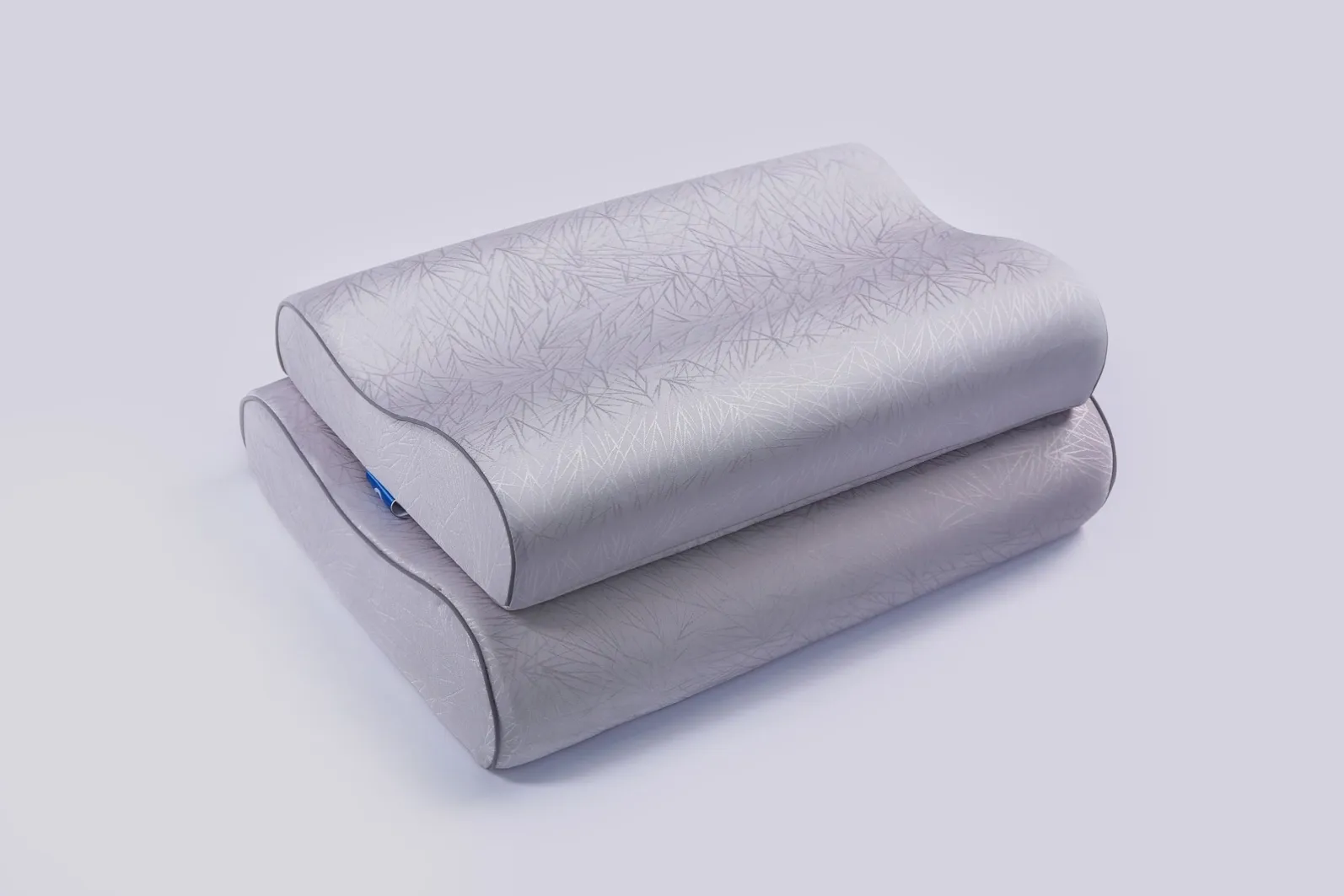
Two suppliers can quote the same 50D memory foam pillow and still be pricing different products. One may calculate a heavier core, a higher-GSM cover and tested vacuum packaging, while another assumes a lighter core, stock fabric and a smaller delivery scope.
Until those assumptions are written into one RFQ specification sheet, the lowest unit price is not a purchasing decision. It is only a number built on an unknown product.
1. Define the Quote Before Comparing the Price
State whether the request is a budgetary quote, a development quote or a production-ready quote. Include the intended sales channel, target market, annual forecast and price breaks for the quantities you may actually order, such as 300, 500 and 1,000 units.
Ask each supplier to return the same commercial fields: sample charge, sample lead time, bulk lead time, product MOQ, material MOQ, packaging MOQ, tooling charge, unit price, quotation validity and payment schedule. A single MOQ figure is incomplete when the foam core, knitted cover, embroidery and printed box have different production minimums.
For a new contour, confirm whether the quotation uses an existing mold or requires new tooling. For an existing profile, identify the exact drawing or reference sample so that every supplier costs the same geometry.
2. Lock Foam Density, Firmness and Core Weight
Foam density and foam firmness are not interchangeable. ISO 845:2006 covers apparent overall and core density, while ISO 2439:2008 covers indentation-hardness methods for flexible cellular materials.
An RFQ should therefore request the test method as well as the result. Terms such as soft, medium and firm can remain useful range names, but they are not a repeatable incoming-inspection method.
Add Core Weight because density alone does not confirm how much foam is present in a contoured shape. The approved weight links the quoted material content to the finished mold profile and helps identify an unexplained change between the sales sample and bulk production.
The table below is an illustrative buyer worksheet, not a universal pillow standard. Replace the example targets after approving the intended product and record the final values on the signed sample sheet.
RFQ Parameter | Example Buyer Instruction | Supplier Must Return | Approval Evidence |
|---|---|---|---|
Finished Core Size | 600 x 400 x 120 mm; tolerance +/- 10 mm after conditioning | Measured L x W x H and conditioning time | Dated measurement record for the approved core |
Foam Density | 50 +/- 3 kg/m3; report test basis against ISO 845 | Tested density, sample mass, sample dimensions and report date | Lot-linked density report, not only a 50D sales description |
Core Net Weight | 1,250 g; working tolerance +/- 5% after Golden Sample approval | Actual sample weight and proposed production tolerance | Calibrated scale record and signed Golden Sample |
Indentation Hardness | Supplier to state ISO 2439 method and measured result | Method, test-piece condition, indentation result and unit | Test report tied to the quoted foam grade |
Vacuum-Packed Unit | Maximum 420 x 180 x 180 mm; buyer recovery protocol required | Packed size, compression date, seal method and recovery results | Photos and measurements after the agreed storage intervals |
Master Carton | 6 units; maximum 560 x 430 x 380 mm | Units/carton, external size, NW, GW and carton material | Packing trial, carton photo and final packing list |
These figures only become contractual after sample approval. A factory should flag an unrealistic target before quoting instead of silently changing the material or packed size.
3. Separate Cover, Branding and Packaging Cost Lines
Write the cover as fiber composition + finished GSM + construction + color standard + closure. A quote for polyester knit is not comparable with a quote for a 260 GSM stretch knit, and neither is complete without the zipper, inner liner, piping and wash-label construction.
Keep Fabric MOQ separate from finished-product MOQ. A factory may support a small order by using an approved stock fabric, while a custom-dyed or custom-knitted cover may require a higher material commitment; the quote should show the applicable MOQ, surcharge and unused-material ownership.
List every branding element as a separate cost line: embroidery, woven label, heat-transfer mark, care label, insert, color box and master-carton print. Ask for Pantone matching, artwork size and placement on a Free Mockup before paying for a physical branded sample.
Use the existing cover fabric and packaging cost-control guide to define shrinkage, pilling and packed-CBM checks. Fast sampling is useful only when the sample approval sheet records which details are final and which are still provisional.
4. Normalize CBM, MOQ and Incoterm
Require the external dimensions of the final packed master carton, not an estimated CBM. A carton measuring 560 x 430 x 380 mm is 0.0915 CBM; with six pillows, the theoretical carton volume is 0.01525 CBM per unit before pallets, loading gaps or destination handling are added.
Ask the supplier to quote one named delivery basis and location, such as EXW factory, FCA named terminal or FOB named port, and list what is included. The ICC Incoterms 2020 checklist recommends FCA for container or multimodal movements, while FOB is intended for goods delivered on board a vessel; the named place and responsibility split matter more than using a familiar three-letter term.
Do not compare an EXW product price with an FOB or delivered quote in the same unit-price column. Keep product, export handling, freight, duty, inspection and marketplace preparation as separate landed-cost lines.
For Amazon programs, calculate fees from the approved packed-unit dimensions, not an early sample box. A small packaging change can alter chargeable size, carton utilization and the number of units that fit into an inbound shipment.
5. Freeze Certificate Scope and Quote Revision
Compliance documents must identify the certificate holder, material or product scope, report number and validity date. OEKO-TEX STANDARD 100 covers tested textile articles and components according to the stated certificate scope, so a cover-fabric certificate should not be presented as automatic proof for every component of the finished pillow.
For polyurethane foam, request the exact foam producer and foam family covered by the supplier's CertiPUR-US documentation. The official CertiPUR-US foam-producer guidance distinguishes slabstock and molded flexible polyurethane foam certification routes; a logo in a quotation is not a substitute for scope verification.
Give the RFQ a revision number such as RFQ-R02 and require that number on the supplier quotation, sample approval sheet and purchase order. When the cover, density target, packaging or label changes, issue a new revision instead of approving the change through an untracked chat message.
Connect the final quotation to a signed Golden Sample and the bulk pillow pre-shipment inspection checklist. Final payment and shipment release should use the same controlled specification that suppliers used to calculate price.
Our factory can return a line-by-line quotation covering the foam core, cover, branding, unit pack, master carton and Incoterm. We support flexible small-batch configurations, Free Mockup preparation, rapid sample development and a defined defect-control record before bulk release.
Explore Related OEM Sourcing Guides